Upon discovering this forum thread where another user says the tool for importing markdown graphs to the DB version doesn’t work, I’ve decided I’m moving to Obsidian. It’s just unfathomable to me that the Logseq team thinks it’s ok to switch the main repository to the DB version before the import tool is even working. That implies they either don’t have a test suite for the importer, or it’s severely lacking. The bar they have to beat is Obsidian’s own import tool, which supports Logseq, and they’re not there yet.
Obsidian’s import tool isn’t perfect, but when I responded to an issue about pages inside namespaces being broken, it was fixed right away. That’s a sign of a much healthier ecosystem than Logseq letting issues with core functionality get auto-stale closed without even a developer response.
I plan to stay on OG, because I use Syncthing to keeping my notes available on all my devices, I don’t want to need a specialized server for that. For me the drawbacks of pure text are miniscule when compared to drawbacks of a DB where a single corrupted file will wreck my entire knowledge base and I can’t resolve merge conflicts manually. With a single SQLite DB file all I can do is try to rollback, loosing data. Not a good idea for a distributed network.
So far Logseq OG over Syncthing has been solid (for multiple years now) and I don’t see a good reason to throw that off.
Oh, I have been a user of Logseq, but I am unaware that it’s migrating to a DB. I came to stay in Markdown and I have the files in my Obsidian vault.
How do I figure out what version I am on or how to stay on the non-DB version?
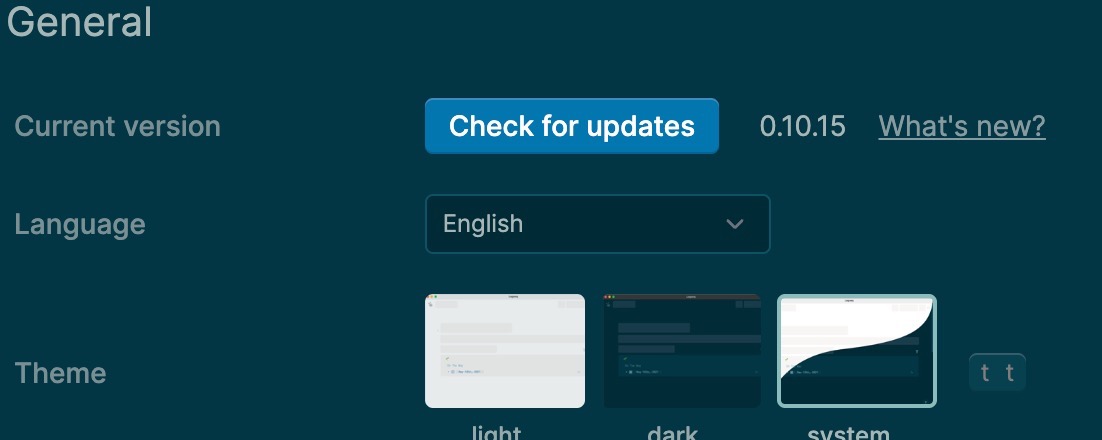
I am on 10.15.
I had also been paying $5 but just cancelled it because I don’t know which one I am supporting. My hope would be the version I use is what is supported.
is syncthing something that is hard to maintain? one of the reasons I paid was because they had a syncing service on the paid plan. I am trying to not have to maintain things on my laptop or to get my own dedicated server to run things in the short term before I slowly migrate things off of the cloud. But that will be slow mostly due to maintenance.
I spent so much time and effort in building my graph that i now find it very hard to switch to DB version. Especially since i have some trouble getting the hang of it. Many people here say that the OG version is a finished product and needs no new features. i agree with that, but there are still some bugs, or shall we say disadvantages, that need fixing in my opinion.
I have kept it intentionally very boring. When I’d discovered Logseq all those years ago, I was struggling to keep my Joplin notebooks useful. The folder-based hierarchy demanded too much of my attention. An outliner like Logseq was a godsend.
Like everyone, I’d started with zealously reading through every workflow on Discord, watching YouTube videos about insane plugin-heavy methods, and trying to replicate it all in my graph. I failed miserably.
I settled on these few primitives:
Journal only: Majority of my note-taking happens in the today’s journal. There are a few topics which I keep coming back to - learning a new language, a long-running project - which get their own page, but I just use this page as a loose structure that I can cite in a journal.
Almost every entry into the journal is either indented under a page or tagged with something.
Try to write about every debugging session: When I figure something out, I always try to write about it in the journal. My future self has found it pretty useful whenever I came across a similar problem.
Limited use of queries: I tried building a system on advanced queries but again, failed to keep up with it. I now have a query which pulls all of my personal tasks into one “Homepage” and that’s about it.
Search-heavy: I search for my old entries whenever I face a problem. If I find something related, I add an indented block entry like this: “UPDATE on <today’s journal date>: Came across this thing again and blah blah blah…”. These help my future self in seeing the evolution of my thoughts on a topic.
A few plugins that I use regularly:
Logseq incremental blocks: helps me plan a whole bunch of unrelated, long-running tasks efficiently.
A custom plugin to sync all of my processed articles and their annotations from Zotero into journals. Zotero local plugin does something similar.
Random note: very crucial for me as otherwise I rarely revisit my old entries.
Logseq Copilot: It has come in handy a bunch of times when I search in browser and see (surprisingly) that I already had an entry about it in my journals.
I’ve been meaning to write a detailed blog post on my current setup but haven’t managed to do so far. The above covers the majority of it nonetheless.